
Make an ambitious agenda executable
After working with the youth employment team, I partnered with the Worker Empowerment Cabinet’s chief and chief of staff on a wider question: how should the cabinet organize itself to pursue an ambitious agenda while running the programs it already had?
The Office of Workforce Development’s move into City government made it a good moment to clarify how the cabinet and its offices fit together. A consultant supported the broader strategic planning process. My work was advising the chief on organizational structure: who owned what, and how the team could carry more of the strategy without her.
The chief had experienced, creative senior leaders running strong programs. But she was handing them tasks rather than outcomes, so anything strategic or new came back to her. Staff, for their part, were unsure about decision-making, team boundaries, and who owned what.
Working with a Deputy Chief and the Chief of Staff, I brought those findings together in a proposal connecting the cabinet’s critical tasks, people, culture, and formal structure to specific recommendations about functions, authority, and roles.
Clarify the work and who owns it
The central shift was to delegate goals and outcomes, not only tasks. Senior leaders needed responsibility for objectives and results, and room to decide how to reach them.
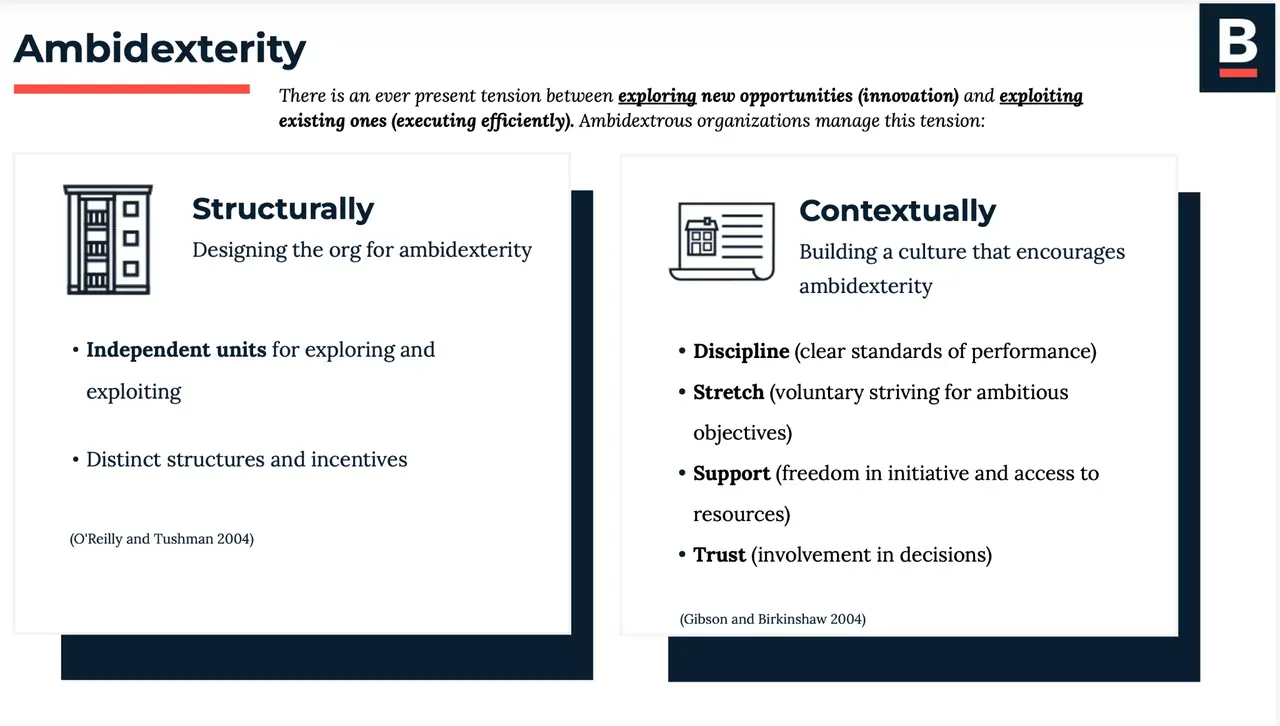
The cabinet also needed people exploring new programs and partnerships while other teams kept current commitments running. I used the idea of an ambidextrous organization to make that tension explicit and assign it.
Give cabinet-wide work a home
We proposed separating shared cabinet functions from the offices that deliver programs. Alongside administration and finance, we defined four functions:
- Implementation Strategy: Translate policy goals into programs, develop expertise and relationships, and track how the work advances those goals.
- Grants Development: Coordinate the pre-award work of finding and winning funding.
- Public Relations: Own cabinet-wide communications and relationships with the community and stakeholders.
- Strategic Initiatives: Support internal change, from strategic planning to technology implementation.
Winning funding, shaping a program, and improving internal operations are different jobs, even when the same people do them.
Make roles understandable
We recommended clearer titles and a consistent ladder between levels, tested with three questions. Could someone elsewhere in City government understand a role from its title? Did staff understand how they could grow? Was it obvious who led each function?
What changed
Some of the most useful moves didn’t need a new org chart. I helped move a program that no longer fit the cabinet’s direction to a part of the City better placed to run it. A team whose goals sat closer to another leader’s agenda stayed in the cabinet but gained a new executive sponsor aligned with its work.
The cabinet also moved forward with the reframed team roles and much of the new clarity around cabinet functions.